Beginner's Guide to Pokémon Pokopia
Never played Pokopia before? This covers everything you need to understand the game before you start — how habitats work, what Ditto's moves do, how Pokémon settle in your town, and what the core loop actually looks like.
What is Pokémon Pokopia?
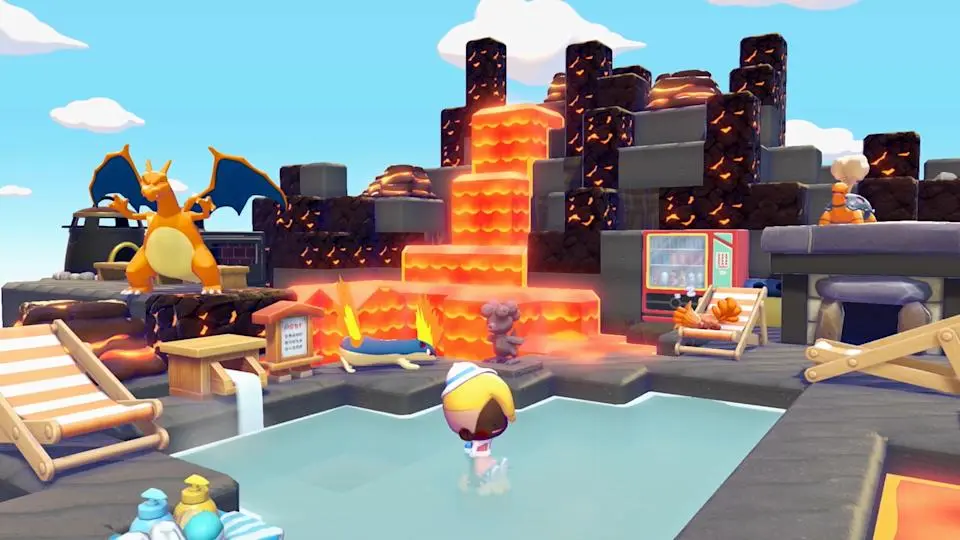
Pokémon Pokopia is a slow-paced sandbox building game by Game Freak and Koei Tecmo's Omega Force. The core goal: restore ecosystems, build habitats, and bring Pokémon back to a ruined world. Shortest description: Pokémon meets Animal Crossing. Gameplay revolves around building, terrain shaping, gathering materials, farming, and decorating environments so Pokémon naturally appear and settle in. The pacing is closer to a town-builder life sim than a traditional Pokémon game. Nintendo Switch 2 exclusive — no Steam, no Switch 1.
You're playing as Ditto
The player character is a Ditto that missed its trainer so much it learned to mimic a human. Instead of a traditional tool inventory, you use moves learned from other Pokémon as your tools. Different moves do different things: tilling soil, planting grass, clearing weeds, chopping trees, breaking rocks, swimming, gliding. Think of it as a skill tree disguised as a move list. When you hit a wall of boulders or a stretch of ocean, you need to attract a Pokémon that can teach you the right move — or complete its request to earn it — then go back and open the path.
The habitat system is everything
You don't catch Pokémon in Pokopia — you build environments they want to live in. Habitats work like environmental puzzles: find or trigger a "Pokémon trace" in the world, and it gets logged as a hint telling you which elements are needed (grass, trees, rocks, furniture, items). Required objects need to be adjacent or within the same small area. When you nail it, the habitat lights up and the corresponding Pokémon starts spawning. The key insight: the same elements produce different habitats depending on adjacency. Four patches of tall grass alone attracts the Kanto starters. Those same four patches next to a tree shifts the habitat toward shade-dwellers like Scyther or Bellsprout. Same materials, different neighbor — different result.
Terrain is fully reshapeable
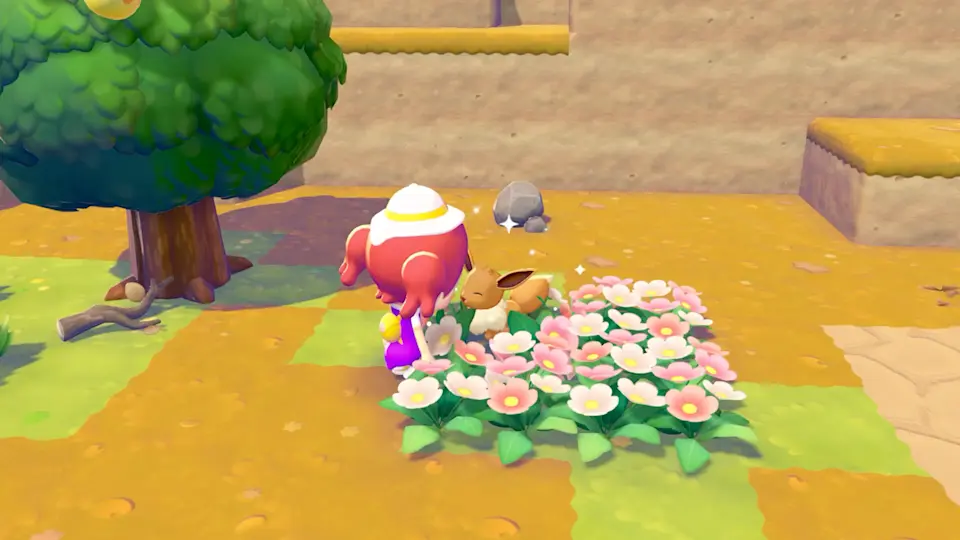
The world uses a block-based destructible terrain system. Almost everything on the surface can be modified: flatten, raise, lower, tunnel through, fill in. Early on you'll mostly clear junk and prep farmable ground. Mid-to-late game you'll be doing real terrain design — layered elevations, staircases, ramps, ponds, water channels, and flat platforms for large habitat layouts. Moves have different range and feel. Watering covers multiple tiles in a specific spread pattern — learn the shape and you can revive a whole dry patch efficiently.
Furniture isn't just decoration
Furniture serves three functions: it looks good, it counts as a habitat condition, and it affects Pokémon comfort and building validity. You can craft tables, chairs, beds, benches, lamps, flower beds, signposts, trash cans, sandbags, fishing rods, and more. Some combinations form specific habitat types. A sandbag next to a seat creates a fighting-type rest spot that attracts Pokémon like Hitmonchan. A fishing rod next to a wooden chair near water creates a fishing spot that draws Magikarp. The more a structure resembles a real living space, the more likely Pokémon are to move in — and the higher the area's environment level climbs.
How Pokémon move into your town
Once a habitat is complete and a Pokémon spawns, interact with it to make it claim the habitat as home. After it settles, it roams the area and a long-term relationship system kicks in. You can leave it in its outdoor habitat or invite it into a house you've built. One habitat typically supports one Pokémon at a time — want more of the same species, build a second or third habitat nearby. This naturally pushes you toward zoning: fishing habitats near water, flower field habitats forming a garden strip, trash-and-pollution zones (which attract Pokémon like Trubbish), and themed neighborhoods where each area's elements stay focused.
Settled Pokémon give you quests
Once a Pokémon settles, it starts giving you requests — a mix of town tasks and personal commissions. Some ask for materials, some send you to find objects in the world, some want you to improve their living space. The rewards are critical: one major reward type is new moves, which expand what you can do. Complete Hitmonchan's request and you might unlock a rock-smashing ability. Complete others and you unlock tree-cutting, detection tools, and more. Requests also raise Pokémon comfort, which accumulates into the area's environment level — and higher levels push the region's restoration story forward.
Farming and food
Farming ties directly into the habitat system. Till soil, plant seeds, and water crops to turn barren land into productive ground. Crops and plants serve as both material sources and habitat elements — wood, grass, flowers, and berries all feed back into crafting recipes for furniture and habitat objects. Scaling up a flower field doesn't just look nice: a large enough flower density can attract rarer Pokémon that a small patch won't. There's also a stamina system — long terrain work and exploration drains you. Gather ingredients and bring them to cooking characters to make food that provides temporary buffs to stamina, move efficiency, and exploration speed.
How exploration works
The map is split into multiple large environment zones, each with different problems and restoration goals. You might start in a dried-out wasteland, then move into a flooded and polluted coastline, then hit terrain with collapsed paths and multi-level geography. As you explore, you constantly pick up habitat hints — these are the game's way of showing you what to do next. They reveal a silhouette of an attractable Pokémon and the habitat conditions needed. If you get stuck, the town system also lets you purchase additional hints through in-town channels so you're never completely blocked.
Crafting and building
Building uses a standard sandbox recipe system: gather wood, stone, grass, flowers, and other materials, then bring them to a workbench to craft blocks, building materials, and furniture. Most terrain and building materials can be dismantled and redone, so trial and error is encouraged. As you progress, your building strategy naturally shifts toward functional zoning: one area for farmland and water, one for a flower garden to attract insects and bird Pokémon, one for a fighting training zone, another for pollution management. Looking good is a side effect — what actually drives your layout decisions is habitat conditions and Pokémon wish lists.
Weather and time of day matter
Habitats don't just depend on what you build — they're also affected by time and weather. The same habitat can spawn different Pokémon at night vs. day, or in rain vs. sunshine, and rare variants have higher appearance rates under specific conditions. In the late game you'll start scheduling: build the habitat, then wait for the right weather or time slot before triggering the spawn. It's more efficient than constantly forcing it. This also makes your town feel alive — different things happen at different times, and you can set up multiple habitats across zones so there's always something to do regardless of conditions.
Multiplayer
Pokopia supports up to four players simultaneously. The division of labor works naturally: one person gathers wood and stone, another lays ground and digs water channels, a third places habitat elements, a fourth runs hints and handles requests. Large-scale habitats — like a big flower field to attract rare bee-type Pokémon — are much faster with multiple people. There's also a social side: the Ditto transformation mechanic lets you disguise yourself as environment objects, which makes for a fun hide-and-seek party game mode.
Special Pokémon forms
Special forms in Pokopia aren't just palette swaps — they have unique names, backstories, and roles in the restoration narrative. Mosslax is a Snorlax that slept so long moss and flowers grew all over it. Peakychu is an unusually pale Pikachu with a smaller tail and a faint glow. These aren't random wild spawns — they appear after you've built stable multi-habitat environments and pushed your area's environment level high enough. They're key to unlocking new interactions and expanding into new parts of the world.
Town facilities
Your town isn't just houses and habitats — it also gains functional facility nodes over time. The most useful early on is the hint shop, which lets you buy habitat hints so you always have a lead on what to build next. Some Pokémon characters are essentially facilities themselves: DJ Rotom turns your base music into a collectible and configurable system. Chef Dente makes cooking into a proper on-demand buff system. Building out these facilities is part of what makes your town feel like a real place rather than just a collection of habitats.